
|
Booker T. Washington recalled his childhood in his autobiography, Up
From Slavery. He was born in 1856 on the He went to school in Franklin County - not as a student, but to carry books for one of James Burroughs's daughters. It was illegal to educate slaves. "I had the feeling that to get into a schoolhouse and study would be about the same as getting into paradise," he wrote. In April 1865 the Emancipation Proclamation was read to joyful slaves in front of the Burroughs home. Booker's family soon left to join his stepfather in Malden, West Virginia. The young boy took a job in a salt mine that began at 4 a.m. so he could attend school later in the day. Within a few years, Booker was taken in as a houseboy by a wealthy towns-woman who further encouraged his longing to learn. At age 16, he walked much of the 500 miles back to Virginia to enroll in a new school for black students. He knew that even poor students could get an education at Hampton Institute, paying their way by working. The head teacher was suspicious of his country ways and ragged clothes. She admitted him only after he had cleaned a room to her satisfaction. In one respect he had come full circle, back to earning his living by menial tasks. Yet his entrance to Hampton led him away from a life of forced labor for good. He became an instructor there. Later, as principal and guiding force behind Tuskegee Institute in Alabama, which he founded in 1881, he became recognized as the nation's foremost black educator. Washington the public figure often invoked his own past to illustrate his belief in the dignity of work. "There was no period of my life that was devoted to play," Washington once wrote. "From the time that I can remember anything, almost everyday of my life has been occupied in some kind of labor." This concept of self-reliance born of hard work was the cornerstone of Washington's social philosophy. As one of the most influential black men of his time, Washington was not without his critics. Many charged that his conservative approach undermined the quest for racial equality. "In all things purely social we can be as separate as the fingers," he proposed to a biracial audience in his 1895 Atlanta Compromise address, "yet one as the hand in all things essential to mutual progress." In part, his methods arose for his need for support from powerful whites, some of them former slave owners. It is now known, however, that Washington secretly funded anti segregationist activities. He never wavered in his belief in freedom: "From some things that I have said one may get the idea that some of the slaves did not want freedom. This is not true. I have never seen one who did not want to be free, or one who would return to slavery." By the last years of his life, Washington had moved away from many of his accommodationist policies. Speaking out with a new frankness, Washington attacked racism. In 1915 he joined ranks with former critics to protest the stereotypical portrayal of blacks in a new movie, "Birth of a Nation." Some months later he died at age 59. A man who overcame near-impossible odds himself, Booker T. Washington is best remembered for helping black Americans rise up from the economic slavery that held them down long after they were legally free citizens. |
Although he would have much preferred to be remembered as a
highly successful military hero, Lew Wallace has
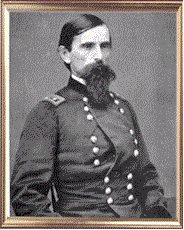 been
thwarted in this ambition and is best known as an author. Born in Indiana,
he had worked as a clerk and early displayed a fascination for Mexico
which would affect him in later years. During the Mexican War he served as
a second lieutenant in the lst Indiana but saw only minor action. In 1849
he was admitted to the bar in his native state and seven years later
entered the state senate. been
thwarted in this ambition and is best known as an author. Born in Indiana,
he had worked as a clerk and early displayed a fascination for Mexico
which would affect him in later years. During the Mexican War he served as
a second lieutenant in the lst Indiana but saw only minor action. In 1849
he was admitted to the bar in his native state and seven years later
entered the state senate. With the outbreak of the Civil War he offered his services, and his assignments included: adjutant general of Indiana (April 1861); colonel, 11th Indiana (April 25, 1861); colonel, 11th Indiana (reorganized August 31, 1861); brigadier general, USV (September 3, 1861); commanding 3rd Division, District of Cairo, Department of the Missouri (February 14-17, 1862); major general, USV (March 21, 1862); commanding 3rd Division, Army of the Tennessee (February 17-June 1862); commanding 8th Corps, Middle Department (March 22, 1864-February 1,1865 and April 19-August 1, 1865); and also commanding the department (March 22, 1864-February 1,1865 and April 19-June 27, 1865). His career got off to a promising start when he routed an inferior Confederate force at Romney, Virginia. Promoted to brigadier general, he was given charge of a newly organized division in the midst of the operations against Fort Donelson and was soon rewarded with a second star. However, that spring his reputation plummeted after the battle of Shiloh. On the first day his division was stationed north of the main army at Crump's Landing, and a series of contradictory orders from Grant forced him to countermarch his command and delayed his arrival on the main battlefield until the fighting was nearly over. He redeemed himself on the second day, but a scapegoat was needed for the near disaster the day before and this was Wallace. Sent home to await further orders, he offered his services to Indiana Governor Oliver P. Morton and, despite his high rank, took temporary command of a regiment during the emergency posed by Kirby Smith's invasion of Kentucky. With Cincinnati threatened, Wallace was placed in charge of a mostly civilian defense force. Through a show of tremendous energy he was able to save the city without a major fight. He was then head of the commission which examined Buell's handling of the invasion and other boards until placed in charge in Maryland in early 1864. There he bought valuable time for the defenders of Washington during Early's drive into the state when he made a stand at Monocacy with an inferior scratch force. At the close of the war he sat on the court-martial which tried the Lincoln conspirators and presided over that which sent Andersonville chief Henry Wirz to the gallows. He then joined a movement to aid the Juarez forces against Maximilian in Mexico. He tried to raise money and troops and even accepted the title of major general from the Juarez group. On November 30, 1865, he resigned from the U.S. service, but his Mexican venture collapsed and he realized little of the money which he had hoped to gain from it. In later years he was governor of the New Mexico Territory and a diplomat to Turkey. As a prolific writer, who often drew upon his own experiences, he is best remembered for Ben Hur.- A Tale of the Cbrist, one of the most popular novels of the nineteenth century. |
|
Voltaire, assumed name of François Marie Arouet (1694-1778), French
writer and philosopher, who was one of the leaders |
|
The novels of Russia's greatest writer, Leo Tolstoi, captured
the vastness of the Russian landscape and the complexity of its |
|
Jonathan Swift was born on November 30, 1667 in Dublin, Ireland, the
son of Protestant Anglo-Irish parents: his ancestors |
|
Novelist and poet Sir Walter Scott was born in 1771 in
Edinburgh, one of six surviving infants from twelve.
At eighteen months he took ill with poliomyelitis but pulled through
although with a lame right leg. He was well educated, studying at
Edinburgh University. In 1792 he was admitted to the Faculty of
Advocates, becoming Sheriff-Depute of Selkirkshire from 1799 and Principal
Clerk to the Court of Session from 1806. He was married in 1797 to
French Charlotte Charpentier, who bore him four children.
Fired by the tales and poems he heard as a child recuperating from his
illness at his grandfather’s farm, |
|
Rudyard Kipling, born in Bombay, India, on December 30, 1865, made a
significant contribution to English Literature Returning to India in 1882 he worked as a newspaper reporter and a part-time writer and this helped him to gain a rich experience of colonial life which he later presented in his stories and poems (Martinez, Gabriel A.). In 1886 he published his first volume of poetry, ‘Departmental Ditties’ and between 1887 and 1889 he published six volumes of short stories set in and concerned with the India he had come to know and love so well. When he returned to England he found himself already recognized and acclaimed as a brilliant writer. Over the immediately following years he published some of his most exquisite works including his most acclaimed poem "Recessional" and most famed novel "Kim". In 1907 Kipling won the Nobel prize in literature in consideration of the power of observation, originality of imagination, virility of ideas and remarkable talent for narration which characterized his writings. Death of both his children, Josephine and John, deeply affected his life. Both these incidents left a profound impression on his life, which his works published in the subsequent years after their deaths displays. Between 1919 and 1932 he traveled intermittently, and continued to publish stories, poems, sketches and historical works though his output dwindled. As he grew older his works display his preoccupation with physical and psychological strain, breakdown, and recovery. In 1936, plagued by illness, he passed away into the world beyond, leaving behind a legacy that will live for centuries to come. Kipling’s works span over five decades, with Tennyson and Browning still writing and Hardy and Yeats unheard of, when his first work Schoolboy Lyrics hit the press (Page, Norman). He wrote during the period now known as the Victorian Age. According to English and Western Literature, conservatism, optimism and self-assurance marked the poetry of this age. Though Kipling’s works achieved literary fame during his early years, as he grew older his woks faced enormous amount of literary criticism. His poems dealt with racial and imperialistic topics which attracted a lot of critics. Critics also condemned the fact that unlike the popular model of poetry, Kipling’ poetry did not have an underlying meaning to it and that interpreting it required no more than one reading. Maguills Critical Survey of Poetry indicates that some critics even attributed the qualities of coarseness and crudeness to his poetry. As Kipling grew older his poetry came under even more scrutiny and doubts began to arise about poetic abilities. These views of the critics come as a surprise due to the fact that even in face of his dwindling reputation in literary circles, his popularity among the masses persisted without change. In fact due to his ability to relate to the layman as well as the literary elite through his works, he joined a select group of authors who reached a worldwide audience of considerable diversity. Kipling’s reputation started a revival course after T.S.Eliot’s essay on his poetic works where Eliot describes Kipling’s verse as "great verse" that sometimes unintentionally changes into poetry. Following Eliot’s lead many other critics reanalyzed Kipling’s verse and revived his poetic reputation to the merited level. In his lifetime Kipling went from the unofficial Poet Laureate of Great Britan to one of the most denounced poet in English Literary History. In contrast to the path his reputation took, Rudyard Kipling improved as a poet as his career matured and by the time of his death Kipling had compiled one of the most diverse collection of poetry in English Literature. |
|
Because schools in Arkansas offered blacks no education beyond the 8th
grade, Johnson’s mother, a widow,
|
|
English historian and scholar, the supreme historian of the Enlightment,
who is best known as the author of the monumental |
|
1856-1928), The leading black American journalist of the late 19th
century.
The son of slaves, Fortune attended a Freedmen's Bureau school for a time
after |
|
Doyle was born in Edinburgh in 1859. He was raised in the
Roman Catholic faith. While Doyle was training to become |
|
CARLO COLLODI is the pen-name of CARLO LORENZINI (1826-90). Collodi is
the name of the little village in Tuscany where his mother was |
|
Samuel Langhorne Clemens was born in Florida, Missouri on
November 30, 1835, one of six children. When Samuel was |
|
Black newspapers did not attain commercial success until Robert S.
Abbott founded the Chicago Defender in 1905. |
|
Francis Bellamy (1855 - 1931), a Baptist minister, wrote the original
Pledge in August 1892. He was a Christian Socialist. In his Pledge, he is
expressing the ideas of his first cousin, Edward Bellamy, author of the
American socialist utopian novels, Looking Backward (1888) and Equality
(1897). Francis Bellamy in his |
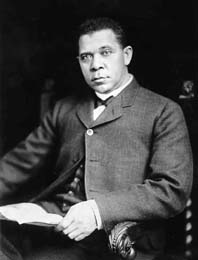 Burroughs tobacco farm which, despite its small size, he always referred
to as a "plantation." His mother was a cook, his father a white man from a
nearby farm. "The early years of my life, which were spent in the
little cabin," he wrote, "were not very different from those of
other slaves."
Burroughs tobacco farm which, despite its small size, he always referred
to as a "plantation." His mother was a cook, his father a white man from a
nearby farm. "The early years of my life, which were spent in the
little cabin," he wrote, "were not very different from those of
other slaves." 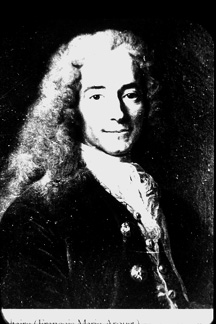 of the Enlightenment.
Voltaire was born in Paris, November 21, 1694, the son of a notary. He was
educated by the Jesuits at the College Louis-le-Grand.
Voltaire quickly chose literature as a career. He began moving in
aristocratic circles and soon became known in Paris salons as a brilliant
and sarcastic wit. A number of his writings, particularly a lampoon
accusing the French regent Philippe II, duc d'Orléans of heinous crimes,
resulted in his imprisonment in the Bastille. During his 11-month
detention, Voltaire completed his first tragedy, (Edipe, which was based
upon thr (Edipus tyrannus of ancient Greek Dramatist Sophocles, and
commenced an epic poem on Henry IV of France. (Edipe was given its initial
performance at the Théâtre-Français in 1718 and received with great
enthusiasm. The work on Henry IV was printed anonymously in Geneva under
the title of Poème de la ligue (Poem of the League, 1723). In his first
philosophical poem, Le pour et le contre (For and Against), Voltaire gave
eloquent expression to both his anti-Christian views and his rationalist,
deist creed.
of the Enlightenment.
Voltaire was born in Paris, November 21, 1694, the son of a notary. He was
educated by the Jesuits at the College Louis-le-Grand.
Voltaire quickly chose literature as a career. He began moving in
aristocratic circles and soon became known in Paris salons as a brilliant
and sarcastic wit. A number of his writings, particularly a lampoon
accusing the French regent Philippe II, duc d'Orléans of heinous crimes,
resulted in his imprisonment in the Bastille. During his 11-month
detention, Voltaire completed his first tragedy, (Edipe, which was based
upon thr (Edipus tyrannus of ancient Greek Dramatist Sophocles, and
commenced an epic poem on Henry IV of France. (Edipe was given its initial
performance at the Théâtre-Français in 1718 and received with great
enthusiasm. The work on Henry IV was printed anonymously in Geneva under
the title of Poème de la ligue (Poem of the League, 1723). In his first
philosophical poem, Le pour et le contre (For and Against), Voltaire gave
eloquent expression to both his anti-Christian views and his rationalist,
deist creed. 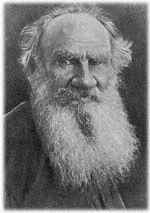 people. His social and moral ideals spread to all parts of the world. His
massive `War and Peace' is regarded as a milestone in the development of
the Western novel.
people. His social and moral ideals spread to all parts of the world. His
massive `War and Peace' is regarded as a milestone in the development of
the Western novel. 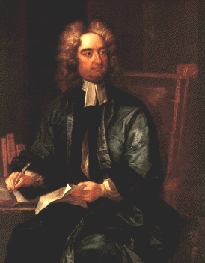 had been Royalists, and all his life he would be a High-Churchman. His
father, also Jonathan, died a few months before he was born, upon which
his mother, Abigail, returned to England, leaving her son behind, in the
care of relatives. In 1673, at the age of six, Swift began his education
at Kilkenny Grammar School, which was, at the time, the best in Ireland.
Between 1682 and 1686 he attended, and graduated from, Trinity College in
Dublin, though he was not, apparently, an exemplary student.
had been Royalists, and all his life he would be a High-Churchman. His
father, also Jonathan, died a few months before he was born, upon which
his mother, Abigail, returned to England, leaving her son behind, in the
care of relatives. In 1673, at the age of six, Swift began his education
at Kilkenny Grammar School, which was, at the time, the best in Ireland.
Between 1682 and 1686 he attended, and graduated from, Trinity College in
Dublin, though he was not, apparently, an exemplary student.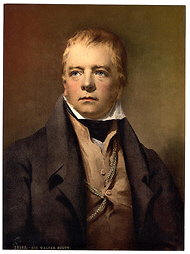 Scott’s first love was literature and
writing. His first works were the fusing and re-working of traditional
tales and ballads. Soon this developed into a new form of writing, bringing history into
romantic adventures. He produced contemporary works on the history
of Scotland, Napoleon, France and past writers.
Scott’s first love was literature and
writing. His first works were the fusing and re-working of traditional
tales and ballads. Soon this developed into a new form of writing, bringing history into
romantic adventures. He produced contemporary works on the history
of Scotland, Napoleon, France and past writers.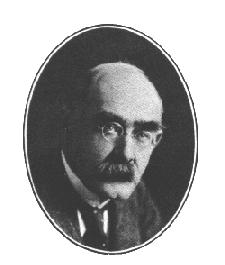 in
various genres including poetry, short story and novel. His birth took
place in an affluent family with his father holding the post of Professor
of Architectural Sculpture at the Bombay School of Art and his mother
coming from a family of accomplished women. He spent his early childhood
in India where an ‘aya’ took care of him and where under her influence he
came in direct contact with the Indian culture and traditions. His parents
decided to send him to England for education and so at the young age of
five he started living in England with Madam Rosa, the landlady of the
lodge he lived in, where for the next six years he lived a life of misery
due to the mistreatment - beatings and general victimization - he faced
there. Due to this sudden change in environment and the evil treatment he
received, he suffered from insomnia for the rest of his life. This played
an important part in his literary imagination (Sandison A.G.). His parents
removed him from the rigidly Calvinistic foster home and placed him in a
private school at the age of twelve. The English schoolboy code of honor
and duty deeply affected his views in later life, especially when it
involved loyalty to a group or a team.
in
various genres including poetry, short story and novel. His birth took
place in an affluent family with his father holding the post of Professor
of Architectural Sculpture at the Bombay School of Art and his mother
coming from a family of accomplished women. He spent his early childhood
in India where an ‘aya’ took care of him and where under her influence he
came in direct contact with the Indian culture and traditions. His parents
decided to send him to England for education and so at the young age of
five he started living in England with Madam Rosa, the landlady of the
lodge he lived in, where for the next six years he lived a life of misery
due to the mistreatment - beatings and general victimization - he faced
there. Due to this sudden change in environment and the evil treatment he
received, he suffered from insomnia for the rest of his life. This played
an important part in his literary imagination (Sandison A.G.). His parents
removed him from the rigidly Calvinistic foster home and placed him in a
private school at the age of twelve. The English schoolboy code of honor
and duty deeply affected his views in later life, especially when it
involved loyalty to a group or a team. 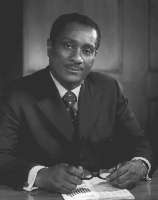 saved
for two years in order to move her family to Chicago so that her son could
continue his high school education. There, he became an honor student and
served as class and student council president and edited the school
newspaper and yearbook. While attending the University of Chicago at
night, Johnson spent his days as an office boy with a life insurance
company. It was here that he devised the idea of a magazine for a black
readership. Negro Digest, first published in 1942, was financed originally
with $500 his seamstress mother raised by pawning their furniture. In less
than a year, circulation was up to 50,000. Johnson now controls the
nation’s largest black-owned company, which has revenues in excess of $140
million. He is publisher of Ebony, Jet, and EM, plus, Johnson engages in
other businesses, including Fashion Fair Cosmetics, Ebone Cosmetics,
Supreme Beauty products and three radio stations.
saved
for two years in order to move her family to Chicago so that her son could
continue his high school education. There, he became an honor student and
served as class and student council president and edited the school
newspaper and yearbook. While attending the University of Chicago at
night, Johnson spent his days as an office boy with a life insurance
company. It was here that he devised the idea of a magazine for a black
readership. Negro Digest, first published in 1942, was financed originally
with $500 his seamstress mother raised by pawning their furniture. In less
than a year, circulation was up to 50,000. Johnson now controls the
nation’s largest black-owned company, which has revenues in excess of $140
million. He is publisher of Ebony, Jet, and EM, plus, Johnson engages in
other businesses, including Fashion Fair Cosmetics, Ebone Cosmetics,
Supreme Beauty products and three radio stations.
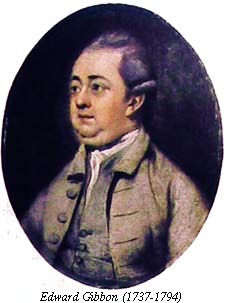 THE DECLINE AND FALL OF THE ROMAN EMPIRE, often considered as the greatest
historical work written in English. "It was at Rome... as I sat musing
amidst the ruins of the Capitol, while barefoot friars were singing
vespers in the Temple of Jupiter, that the idea of writing the decline and
fall of the city first started to my mind." However, Gibbon's first works
were written in French.
Edward Gibbon was born in London into a prosperous family. He was a sickly
child and his education at Westminster and at Magdalen College, Oxford,
was irregular. Gibbon was expelled from Magdalen College for turning into
Roman Catholism. sent in 1753 by his father to Lausanne, Switzerland,
where he boarded with a Calvinist pastor and rejoined the Anglican fold.
In Lausanne he fell in love with Suzanne Curchod. Their relationship was
ended by his father and Gibbon remained unmarried for the rest of his
life.
From 1759 to 1762 Gibbon hold a commission in the Hampshire militia,
reachinf the rank of colonel. In 1764 he visited Rome and was inspired to
write the history of the city from the death of Marcus Aurelius to the
year 1453. After his father died Gibbon ound himself in some difficulties,
but he was able to settle in London to proceed with his great work. The
first volume appeared in 1776, with public reaction to Gibbon's ironical
treatment of the rise of Christianity. Between 1774 and 1783 he sat in the
House of Commons, and become a lord commissioner of trade and
plantations. In 1774 he was elected to Dr Johnson's Club. From 1783 Gibbon
spent much of his time in Lausanne and in England with Lord Sheffield
(John Baker Holroy) in his Sussex and his London House. Lord Sheffield
prepared later Gibbon's MEMOIRS OF MY LIFE AND WRITINGS for publication
(1796) and MISCELLANEOUS WORKS (1796).
THE DECLINE AND FALL OF THE ROMAN EMPIRE, often considered as the greatest
historical work written in English. "It was at Rome... as I sat musing
amidst the ruins of the Capitol, while barefoot friars were singing
vespers in the Temple of Jupiter, that the idea of writing the decline and
fall of the city first started to my mind." However, Gibbon's first works
were written in French.
Edward Gibbon was born in London into a prosperous family. He was a sickly
child and his education at Westminster and at Magdalen College, Oxford,
was irregular. Gibbon was expelled from Magdalen College for turning into
Roman Catholism. sent in 1753 by his father to Lausanne, Switzerland,
where he boarded with a Calvinist pastor and rejoined the Anglican fold.
In Lausanne he fell in love with Suzanne Curchod. Their relationship was
ended by his father and Gibbon remained unmarried for the rest of his
life.
From 1759 to 1762 Gibbon hold a commission in the Hampshire militia,
reachinf the rank of colonel. In 1764 he visited Rome and was inspired to
write the history of the city from the death of Marcus Aurelius to the
year 1453. After his father died Gibbon ound himself in some difficulties,
but he was able to settle in London to proceed with his great work. The
first volume appeared in 1776, with public reaction to Gibbon's ironical
treatment of the rise of Christianity. Between 1774 and 1783 he sat in the
House of Commons, and become a lord commissioner of trade and
plantations. In 1774 he was elected to Dr Johnson's Club. From 1783 Gibbon
spent much of his time in Lausanne and in England with Lord Sheffield
(John Baker Holroy) in his Sussex and his London House. Lord Sheffield
prepared later Gibbon's MEMOIRS OF MY LIFE AND WRITINGS for publication
(1796) and MISCELLANEOUS WORKS (1796).
 a doctor he started to read Darwin, Spencer, and Huxley. Their writings
and his own disenchantment with religion caused him to become an agnostic.
a doctor he started to read Darwin, Spencer, and Huxley. Their writings
and his own disenchantment with religion caused him to become an agnostic. born. He was born in Florence, the son of a cook and a servant, and spent
his chilhood as much in the rough and tumble of the streets of his native
Florence as in the classroom. No doubt this stood him in good stead in his
two periods as a soldier - once in 1848 when Tuscany rose in revolt
against its Habsburg rulers, and again in the war between Italy and
Austria in1859.
born. He was born in Florence, the son of a cook and a servant, and spent
his chilhood as much in the rough and tumble of the streets of his native
Florence as in the classroom. No doubt this stood him in good stead in his
two periods as a soldier - once in 1848 when Tuscany rose in revolt
against its Habsburg rulers, and again in the war between Italy and
Austria in1859.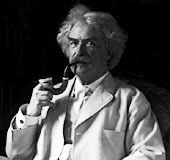 four, his family moved to Hannibal, Missouri a little town on the west
bank of the Mississippi River. His father, John Marshall Clemens, was a
freethinker, a persuasion not at all uncommon in the Midwest of that
period. He is also said to have been stern and puritanical, and was not
Samuel's favorite parent. One of Samuel's biographers, Edward Wagenknecht,
declares that his temperament was inherited from his mother, Jane Lampton
Clemens, who was conventionally religious, but not fanatically
four, his family moved to Hannibal, Missouri a little town on the west
bank of the Mississippi River. His father, John Marshall Clemens, was a
freethinker, a persuasion not at all uncommon in the Midwest of that
period. He is also said to have been stern and puritanical, and was not
Samuel's favorite parent. One of Samuel's biographers, Edward Wagenknecht,
declares that his temperament was inherited from his mother, Jane Lampton
Clemens, who was conventionally religious, but not fanatically Capitalizing on the sensationalist techniques developed by William
Randolph Hearst, Abbott designed the Defender as a paper for the masses.
Abbott initially avoided politics, but the paper came into its own when he
concentrated on muckraking stories about the black community. By 1920, the
Defender had a circulation of 283,571.
Capitalizing on the sensationalist techniques developed by William
Randolph Hearst, Abbott designed the Defender as a paper for the masses.
Abbott initially avoided politics, but the paper came into its own when he
concentrated on muckraking stories about the black community. By 1920, the
Defender had a circulation of 283,571.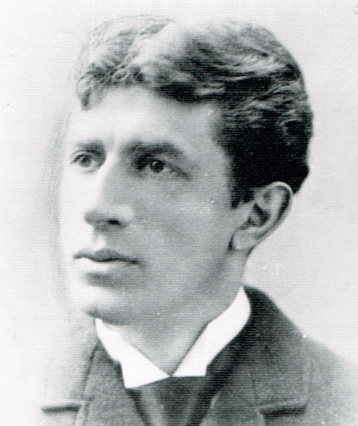 sermons and lectures and Edward Bellamy in his
novels and articles described in detail how the middle class could create
a planned economy with political, social and economic equality for all.
The government would run a peace time economy similar to our present
military industrial complex.
sermons and lectures and Edward Bellamy in his
novels and articles described in detail how the middle class could create
a planned economy with political, social and economic equality for all.
The government would run a peace time economy similar to our present
military industrial complex.